From the Juke Joint to the Oscars
Image: ABC News
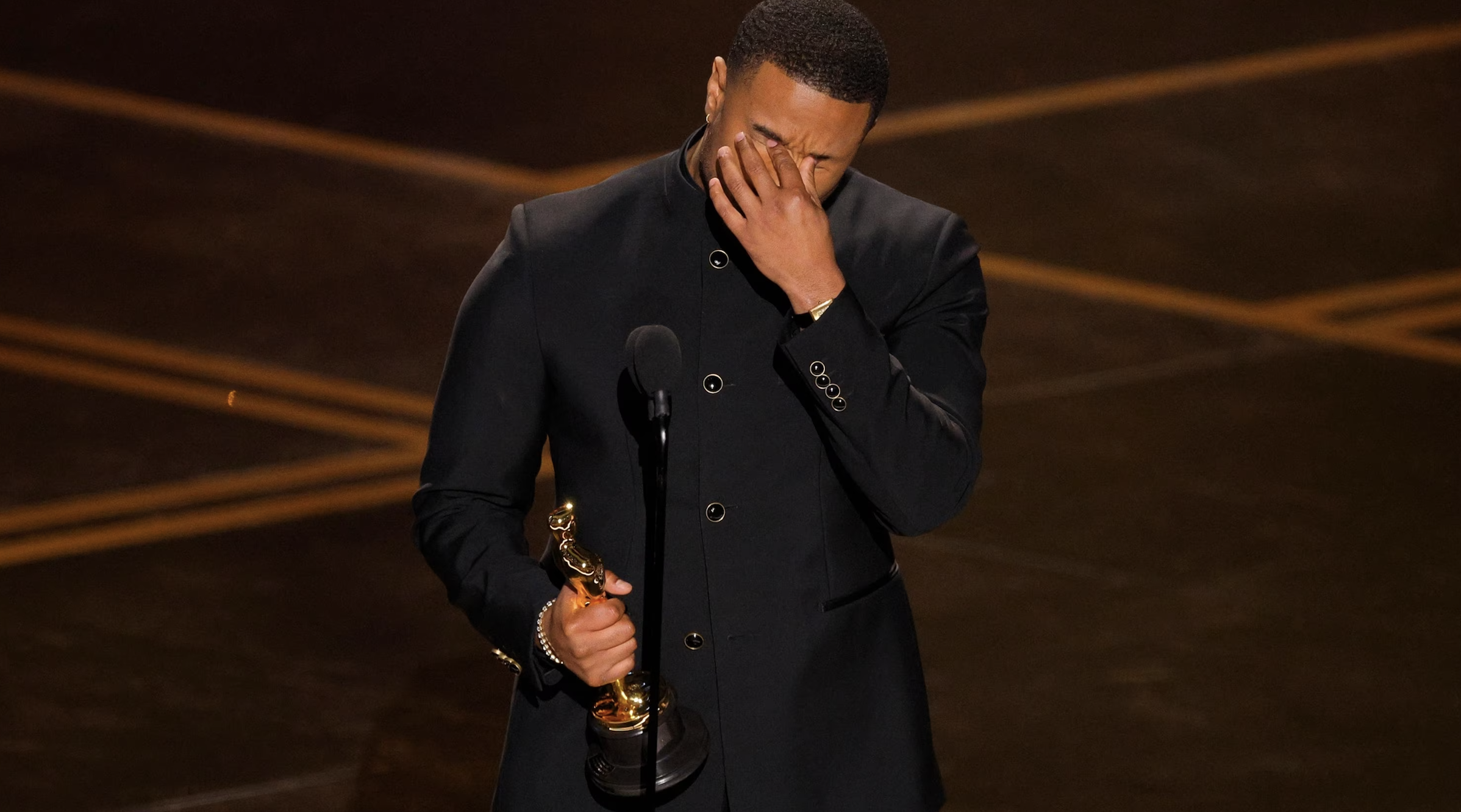
Last night, Michael B. Jordan stood on the Oscar stage, became the sixth Black man in history to win Best Actor, and said something that stopped the room: "I stand here because of the people who came before me — Sidney Poitier, Denzel Washington, Halle Berry, Jamie Foxx, Forest Whitaker, Will Smith."
That moment didn't happen by accident. And it didn't start at the Dolby Theatre on March 15th.
It started with a story — and a strategy built around it.
The Movie Hollywood Didn't Want to Bet On
Sinners was met with curious skepticism from industry analysts even as it broke records. Variety's opening-weekend write-up acknowledged the strong result but quickly pivoted to profitability concerns and the film's $90 million price tag. The American Prospect The so-called experts were looking at the spreadsheet. The audience was looking at the screen.
Sinners debuted to $48 million domestically — the best opening for an original film since Jordan Peele's Us in 2019. Wikipedia It ultimately became a box office juggernaut with $370 million globally. Variety And just this week, it received a record-breaking 16 Oscar nominations and took home four wins The Hollywood Reporter, including Best Actor, Best Original Screenplay for Ryan Coogler, and — for the first time in Academy Awards history — Best Cinematography for a woman.
What closed the gap between skepticism and phenomenon? Storytelling strategy. Executed at every level.
The Story Had a Clear "Why"
Set against the backdrop of 1932 Clarksdale, Mississippi, Sinners follows twin brothers Smoke and Stack Moore as they return home after fighting in World War I and transform a run-down sawmill into a vibrant juke joint for the local Black community. That decision wasn't just a plot point — it evoked the tradition of taking back what was theirs. Medium
The movie uses vampires as a metaphor for cultural appropriation — the literal draining of Black culture, music, and identity by those who want to consume it without crediting its source. Fhntoday That's not a horror movie premise. That's a core narrative with a clear, urgent why — one that resonated deeply in a cultural moment when that fight felt very real.
Darkened theaters became one of the few public spaces where Black audiences could vicariously express their feelings about the head-spinning changes in America's racial landscape. CNN The story met the moment because the storytellers understood the moment.
That's not luck. That's intentional narrative strategy.
The Marketing Did What Most Marketing Won't: It Stayed Rooted
The marketing campaign's most arresting image — Michael B. Jordan storming toward the camera in slow motion, firing a tommy gun — wasn't just visually striking. It told the whole story in one frame: a Black man, unafraid, taking aim at the forces that prey on his community. The American Prospect
The campaign also leaned heavily into authentic connection — cast members appeared on BuzzFeed, Cosmopolitan UK, ELLE, and First We Feast, showing their personalities and building the audience relationship beyond the film itself. Ryan Coogler made podcast appearances discussing his personal motivation for creating the film. Medium
The creator and influencer press tour drove a constant stream of earned media, helping the film dominate both mainstream and social channels in the weeks surrounding release. CORQ
They didn't just market a movie. They invited people into a cultural moment.
Michael B. Jordan's Brand Didn't Just Win an Oscar — It Was Validated by One
In his acceptance speech, Jordan named the only other Black performers who had won Best Actor or Actress — positioning his win not as an individual achievement but as a continuation of a lineage. Rolling Stone That's brand storytelling at its most powerful: connecting your identity to something larger than yourself.
At the SAG Awards two weeks earlier, Jordan said of the film's record 16 nominations: "It's really a testament to the film as a whole and all the pieces involved and the people that went to go see this movie. It meant something to them and they felt something." The Hollywood Reporter
He's not talking about marketing ROI. He's talking about resonance. And resonance is what strategy is built to create.
What This Means for Your Organization
You don't have a $90 million budget. You don't have a Warner Bros. distribution deal.
But you have what Sinners actually ran on: a clear story rooted in truth, a specific community it was made for, and the discipline to tell that story consistently across every platform and touchpoint.
Coogler's deal for Sinners reportedly includes final cut, first-dollar gross participation, and ownership rights reverting to him after 25 years — a blueprint for Black entrepreneurs across every industry to not just sell the work, but own it. Medium
That's the larger lesson. Know your story. Own it. Tell it unapologetically.
Whether you're a nonprofit doing transformative community work, a small business with a founder story that deserves to be heard, or a municipality trying to connect with residents — the question isn't whether you have a story worth telling.
The question is whether you have a strategy to tell it.
At 3E Connections, we help mission-driven organizations build the kind of storytelling strategy that makes people feel something — and then act on it. Because your work is too important to stay invisible.
Ready to build your strategy? Let's Talk.